Clari clears toxins from your blood without disrupting your body's natural defenses.

What We Do

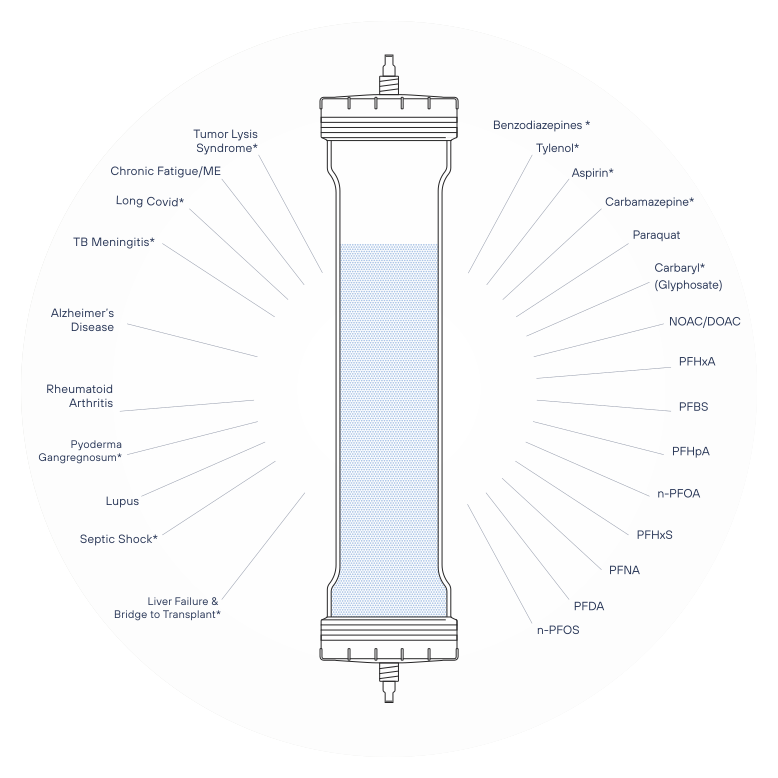
During the Clari procedure, we use a process of continuous centrifugal apheresis that has been safely used millions of times globally to gently separate your plasma from your red and white blood cells. The plasma is then passed through our safe and effective CE marked Clari column, where unwanted substances like microplastics, forever chemicals, and toxins are selectively captured and removed from the plasma. After this selective removal, your clean plasma and previously segregated blood cells are recombined before being returned to you.

Nothing is added to your plasma during this lifesaving process. This means your plasma retains your unique and critical immune balance, electrolytes, clotting factors and cell signaling, and all your blood’s essential components remain intact.

Broad Historical Clinical Utility

Beneficial demonstration of clinical utility in international hospital and elective healthcare environments

  • Drug Overdose *
  • Poisoning *
  • Forever Chemicals
  • Liver / Renal Failure *
  • Sepsis *
  • Autoimmune Disorders *
  • Neurodegenerative
  • Other
Broad Historical Clinical Utility
Drug Overdose *
Poisoning *
Forever Chemicals
Liver / Renal Failure *
Sepsis *
Autoimmune Disorders *
Neurodegenerative
Other

*MTx.100 used as treatment in Hospital setting

Broad Historical Clinical Utility

Beneficial demonstration of clinical utility in international hospital and elective healthcare environments

Forever Chemicals

% PFAS removed after a single Clari procedure*

Forever chemicals don't break down quickly in our bodies, the same way they don't break down quickly in the environment. They are frequently linked to cancer, immune system issues, hormone imbalance, and other serious long-term health risks.

*Bench test data based on a four-hour procedure performed by external third party (Eurofins).

31%

PFHxS(Perfluorohexanesulfonic Acid)

A 6-carbon sulfonate PFAS, anionic fluorosurfactant and persistent organic pollutant.

Found in

Firefighting foams, stain/water-repellent coatings on fabrics and carpets. Often a substitute for PFOS.

Entry to body

Drinking contaminated water, inhaling PFAS-laden dust, skin contact with treated clothing or gear.

Effects

Halflife of about 5 years in blood; linked to liver toxicity, immune effects, altered thyroid function, dyslipidemia, and possible developmental issues.

PFHxS
41%

PFHpA(Perfluoroheptanoic Acid)

A 7-carbon perfluoroalkyl carboxylic acid,
less often studied.

Found in

Similar uses as PFHxA and PFOA, food packaging, waterproof fabrics, nonstick surfaces.

Entry to body

Via contaminated water, dust, food packaging, treated consumer goods.

Effects

Animal data show liver toxicity and developmental effects; human data is sparse but presumed similar to other midlength PFCAs.

PFHpA
49%

Lin. PFOA(Perfluorooctanoic Acid)

8-carbon carboxylic acid PFAS, formerly used in Teflon, carpets, firefighting foams.

Found in

Nonstick cookware, stainfree carpets, food wrappers, industrial emissions.

Entry to body

Primarily through contaminated drinking water, food, workplace exposure, dust.

Effects

IARC classifies it as carcinogenic to humans; linked to kidney and testicular cancer, elevated cholesterol, immune suppression, liver damage,
and reproductive issues.

Lin. PFOA
51%

PFHxA(Perfluorohexanoic Acid)

6-carbon carboxylic acid PFAS.

Found in

Similar industrial replacements for PFOA, in coatings and packaging

Entry to body

Drinking water, dust, food. FDA notes presence in small amounts in some foods.

Effects

Animal studies show liver, immune, developmental toxicity; human data is limited but included in toxicity guidance.

PFHxA
52%

PFBS(Perfluorobutanesulfonic Acid)

4-carbon sulfonate PFAS used to replace PFOS.

Found in

Scotchgard, stainresistant fabrics/carpet, cleaning products.

Entry to body

As above-water, dust, food contact materials.

Effects

Shorter chain, so quicker elimination, but still tied to liver, thyroid, developmental, and immune effects.

PFBS
54%

PFNA(Perfluorononanoic Acid)

9-carbon carboxylate PFAS.

Found in

Food & textile coatings, firefighting foams, industrial emissions.

Entry to body

Drinking water, food, dust, occupational routes.

Effects

Human/lab links to liver toxicity, immune and developmental issues, cholesterol increases, thyroid dysfunction.

PFNA
57%

PFDA(Perfluorodecanoic Acid)

10-carbon perfluorocarboxylic acid; persistent and bioaccumulative.

Found in

Industrial processing, PFAS blends, possibly food contact materials.

Entry to body

Contaminated water, food, environmental exposure.

Effects

Classified as PBT; linked with liver, respiratory, renal, and potential carcinogenic effects; acute toxicity in animals.

PFDA
60%

Lin. PFOS(Perfluorooctane Sulfonate)

A long-chain 8-carbon sulfonate PFAS, widely used fluorosurfactant; most persistent isomer produced via electrochemical fluorination.

Found in

Firefighting foam (AFFF), Scotchgard fabric protector, stain-resistant carpets, textiles, food packaging, metal plating.

Entry to body

Contaminated drinking water, seafood and produce, indoor dust, treated fabrics, transplacental transfer, breast milk.

Effects

Very persistent in blood (half-life ~5 years); linked to hormone disruption (especially thyroid), immune suppression, elevated cholesterol, liver damage, kidney dysfunction, reproductive harm, and possible cancer (Group 2B carcinogen).

Lin. PFOS

Microplastics & Microparticulates

>5 microns removed after a single Clari procedure*

Microplastics make their way into our bodies through everyday sources: the food we eat, the water we drink, even the air we breathe. These particles can carry harmful chemicals and may increase the risk of cancer, organ stress, and other illnesses.

*Bench test data based on a four-hour procedure performed by an external third party (MedClinics).

90%

Herbicides & Pesticides*

The chemicals found in these products have been connected to respiratory concerns, hormone imbalances, and a higher chance of cancer and neurological conditions. Regular exposure, even in small amounts, can lead to chronic health problems.

*Bench test data based on a four-hour procedure performed by an external third party (Namsa).

Paraquat

Paraquat graph

0hr

1hr

2hr

3hr

4hr

1.8mg/L

12mg/L

50mg/L

Toxic
Unsafe
Safe

Paraquat

A highly toxic herbicide (plant toxin) used to control weeds and grasses on farms.

Found in

Commonly used in agricultural crops like soybeans, cotton, corn, wheat and orchards. Banned or severely restricted in many countries such as the EU and China, but still used in the U.S. under regulation.

Entry to Body

Eating foods its been sprayed on, inhaling when sprayed.

Effects

Severe lung damage (fibrosis), kidney and liver failure, Parkinson's disease (linked through chronic exposure in some studies).

Carbaryl

Carbaryl graph

0hr

1hr

2hr

3hr

4hr

1600mg/L

6mg/L

5mg/L

Toxic
Unsafe
Safe

Carbaryl

A broad-spectrum insecticide (insect toxin) used to control insects on crops and in gardens to increase agricultural production.

Found in

Home garden products, agricultural settings and pet shampoos for flea control.

Entry to Body

By touch when using garden products, playing on a lawn that’s just been treated and by eating produce (like apples or lettuce) that hasn’t been washed properly.

Effects

Endocrine disruptor, neurological effects and disrupts nerve function.